
Credits: The Outrun, a film by Nora Fingscheidt
Cinema and literature are two old companions, intertwined for over 140 years. That’s a significant history, and we should not pretend that cinema is still some “new horizon.” The USSR from creation to dismantling hada life span shorter than cinema. Films have had plenty of time to experiment with adaptations, and The Outrun by Nora Fingscheidt is a shining example of how this can be done masterfully.
From Life to Page to Screen
Originally written as a memoir by Amy Liptrot, it was later adapted into a screenplay. It tells the story of a suspended PhD student in London who suffers from an alcohol addiction and after being raped in one of the city parks moves back home to her divorced parents. Here lies the important part to praise this film, the key difference between adaptation and visualization. Though cinema and literature share common techniques, they remain vastly different art forms. They approach character creation, place description, and narrative montage differently. They share concepts but diverge in execution. Once one decides to adapt a book they must face those differences and overcome them. And “The Outrun” succeeds in doing so.
The film never feels dull or fragmented, even during its many contemplative scenes. These moments, often without music or words, leave us alone with the character — yet they are not boring. This is thanks to the film’s fast-paced storytelling, balancing reflection with the unfolding of ideas. It is a story of ideas, new and old, memories of the past and problems of the present. Aren’t sounds similar to memories?

Credits: The Outrun, a film by Nora Fingscheidt
The film feels as it narrated in the first person. We always stand beside Rona at her highest and lowest. Luckily for us Rona is played by Saoirse Ronan and it makes us not want to let her go. Her stunning performance and the fully used potential of the actress are a testament to both Ronan’s abilities and Nora Fingscheidt’s direction. What seems effortless is, in reality, a remarkable achievement. As any Cassavetes fan would tell you, the actor is the ultimate essence of cinema. Usually, films about people, i.e. films centered around the psychology of a personage rather than an event or an action, are the ones in which it is easiest to percieve the slightest misinterpretation between the actor and the character. There could be countless hours of discussion about different actors’ approaches but what matters at the end is the viewers perception. And Rona is there, you never doubt whether she is there, and you are pleased she is there.
Across Landscapes and Minds
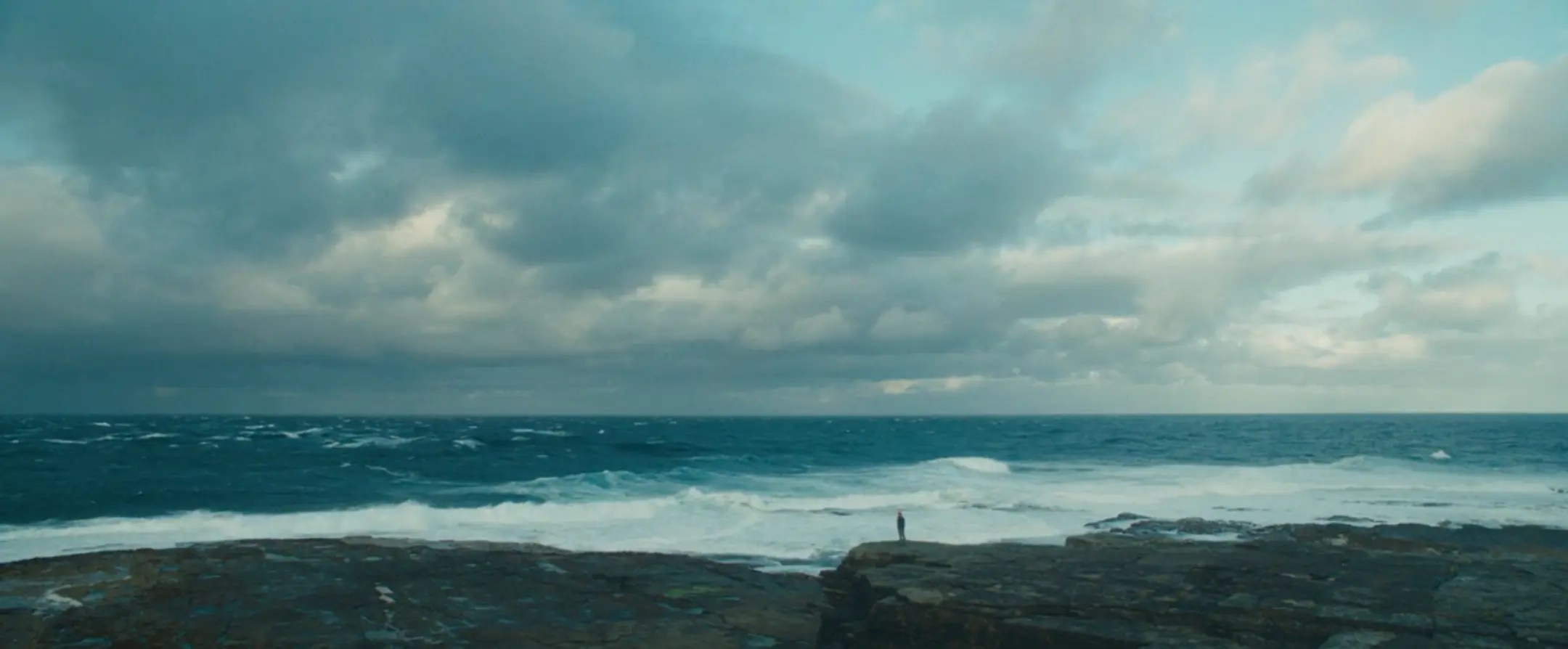
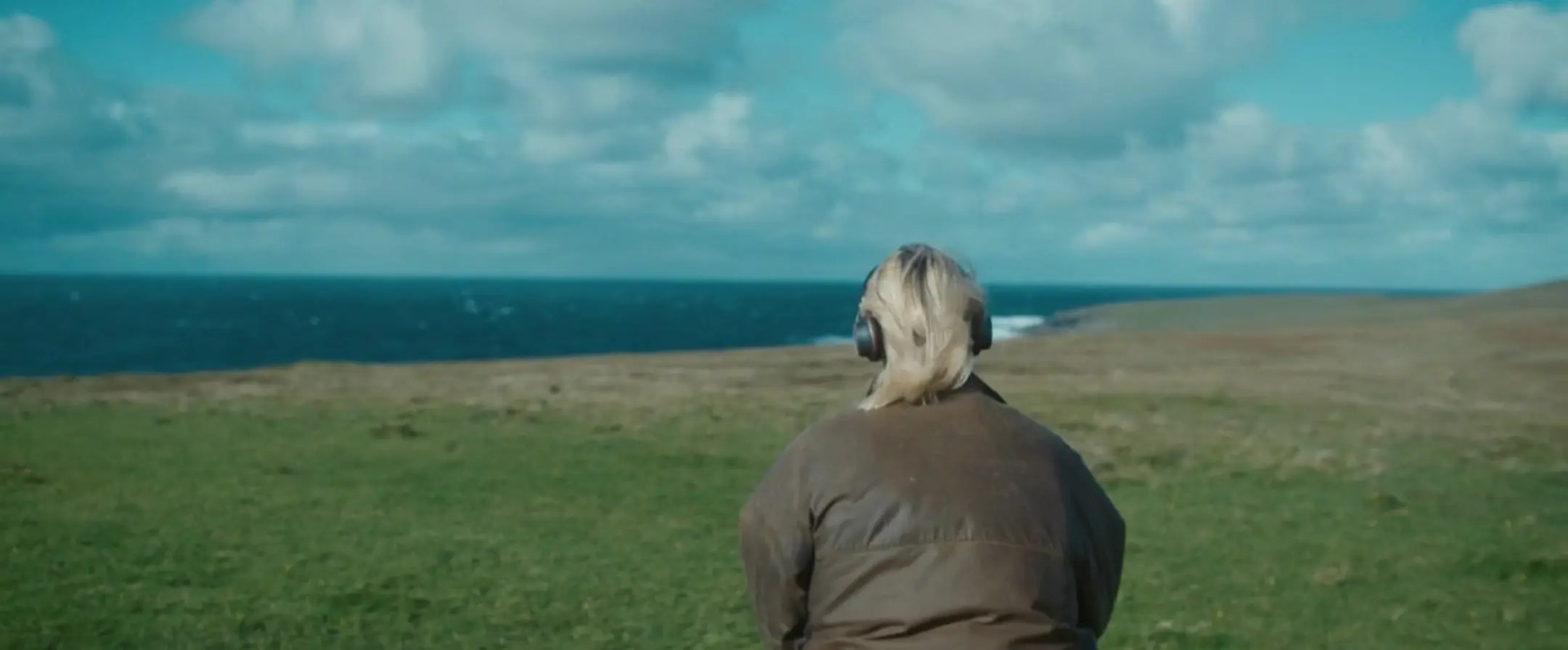
The film is set in the north-eastern Orkney Islands, in Scotland: seemingly cold but softened by the ocean’s warm current. However, this place is shaped by rough winds and waves shrouded in tales. The Islands are the place where our character Rona spent her childhood. She is back to the mainland which is confusingly the name of the biggest island in the archipelago. Her gradually unveiling past gives us more and more information to rightly interpretate the present. A few clichés never did anyone bad as this film uses a search for birds as a parallel of a search of the new way. It is approached with humor at the end, which sets a fresh smell to this old smelly thing. An example is the scene where Rona tells her mother her future plans to become a seaweed scientist. This episode is just full of life and adds so precisely to the meaning of rebirth, and search for a new path.
Credits: The Outrun, a film by Nora Fingscheidt
Rona relearns how to live this life. As her mother did in the past and her father is forced to do every once in a while. As we all do. This piece of art resonates with us not only because we can identify with the character or because the film is built around the way we all live our lives. It is not coming from the social or individual part but rather the etic and moral one. It brings on the light topics of life – crushing, shame, lost and vastness of existence. Those are not things you can share with the character but things you were, will or are experiencing. We all do.
The use of flashbacks feels seamless, functioning as a natural part of the narrative. They echo how our minds work, recalling fragments of the past in seemingly random but meaningful ways. Cinema, as the queen of psychological drama, excels at capturing such nuances, bringing us closer to reality.
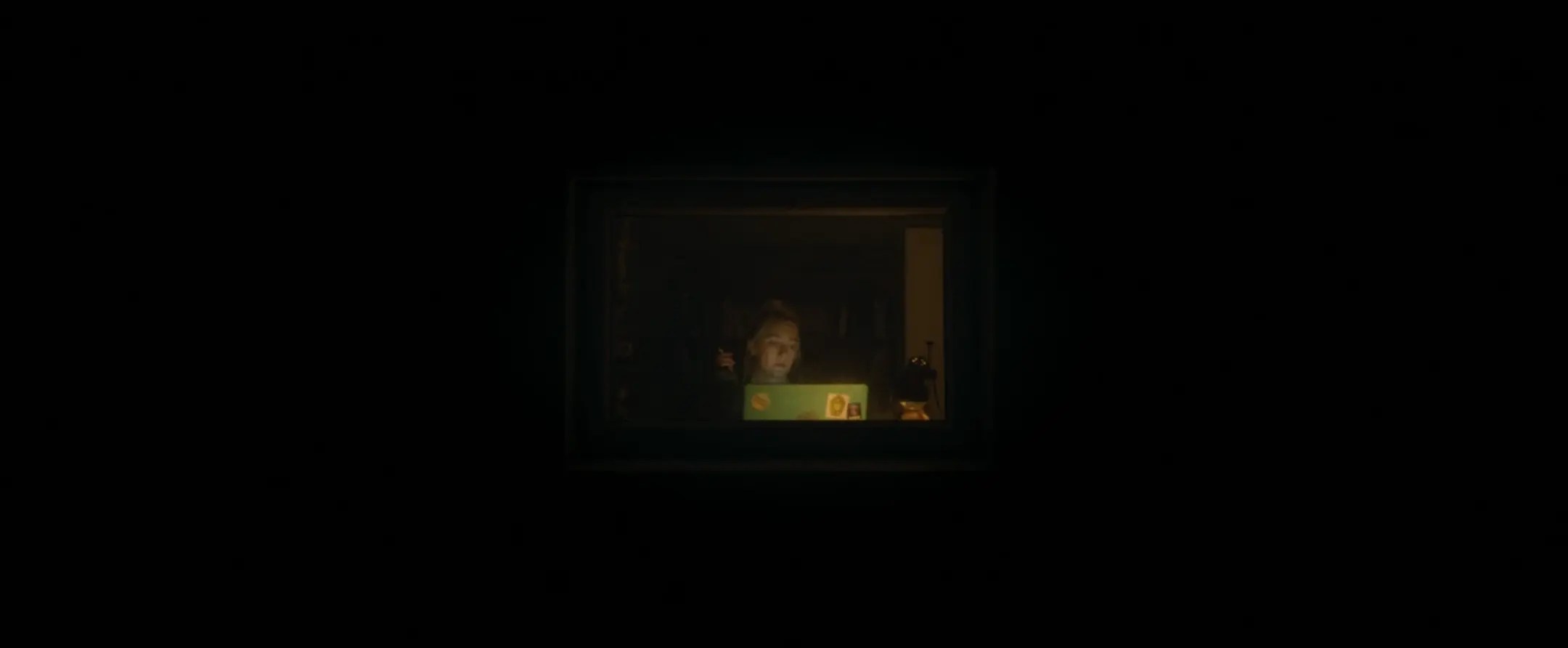
In a visual way film is experimenting a lot with nighttime scenes which is not as common for indie releases. Examples include the outside static shots of windows as they are drowning in the darkness. It is a stunning use of cinematic language. We should mention the overall experience of shooting on the Orkney Islands, as later in film we move to the smaller and smaller islands, as it marks the first time a film is entirely set in that place. It deserves praise for getting out of the Hollywood barn and getting on a turbocharged plane heading north in the ocean.
Credits: The Outrun, a film by Nora Fingscheidt
The film is out. Set to release in some European countries by the end of November, it might crawl to Italy as well.
Viktor Smolkin
Fonts: https://en.wikipedia.org/wiki/Orkney
https://www.imdb.com/title/tt11687002/?ref_=tt_mv_close

 The Password