
To exclude some of the best films ever made from the syllabus of a course named History of Cinema Theory is a bold move. Yet it happens quite often. One might play the ‘Russia is Asia’ card – but not this time. Exactly zero of the twenty films listed as mandatory viewing for this course’s exam is Asian. But once your eyes fall on filmmakers like Edward Yang, Akira Kurosawa, Satyajit Ray, or any other that you might include in this list – there is no turning back. So, let’s look forward, and infuse each decade of cinema with some good films.
Learning about the history of theory is like tracking the movement of a ball. Everything inside the ball is what we know at that moment and everything outside is other possibilities. Some of these possibilities penetrate the ball and become part of it permanently. Others are left behind and forgotten. It is like focusing only on the balls closest to us when watching a game of billiards, but the point is that none of them are the important ones, and, at the same time, none of them should be left out either.
00s
While everyone was busy thinking – what is cinema? – Louis Lumière had already sent his cameraman to China. Soon after, critical discourse emerged in the press, as well as one of the first critical overviews in the world. “The spectator feels as though they are actually present, and this is exhilarating,” reads an extract from Yo-Shi-Bao.
10s
Ancient legends gave birth to the earliest narrative films all over the world. Harishchandra – an Indian legend well known to millions in 1913 – and the earliest Chinese productions gave the starting push for the cinematic future of Shanghai’s and Bombay’s industries.
20s
Leaving filmed theatre behind and criticizing the absence of the ‘cinematic’ element in cinema, the Japanese Pure Cinema movement went out in search of their own language, looking for new ways of using montage not as a tool but as a language and initiating a discussion about rhythm versus absence of interference. These are very vivid years for cinema.
30s
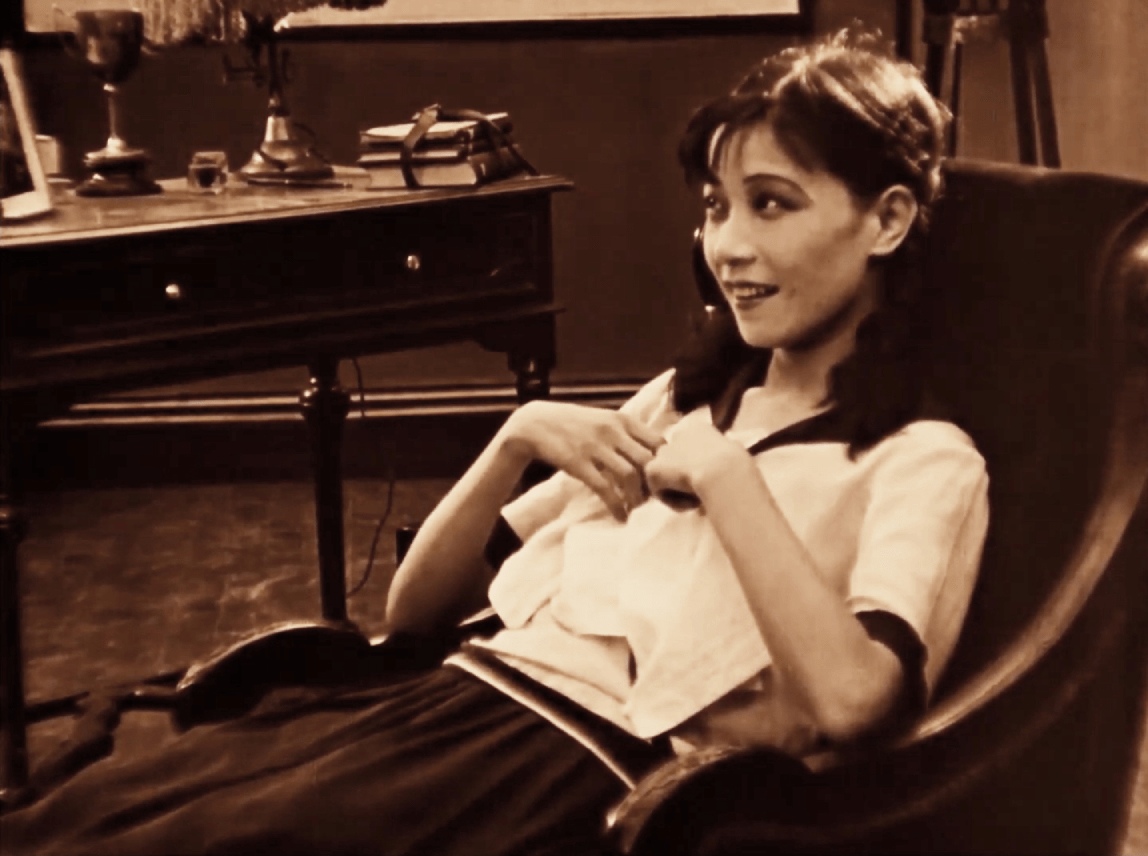
Back when Taiwan was Japan, Americans feared nudity, and Russians feared art — Shanghai filmmakers were producing bold, socially conscious cinema. In a divided China, the leftist movement used films as a means to fight inequality and elevate the working class. And they gave birth to stars like Ruan Lingyu, whose silent performance still stuns the screen.
40s
Yasujirō Ozu best represents the change that occurred between the start and the end of the war. He created films on the humanization of humans in a period when it was the least easy thing to do, and he used a style of montage unique to Asian culture, where intervals and absence become the rhythm.
50s
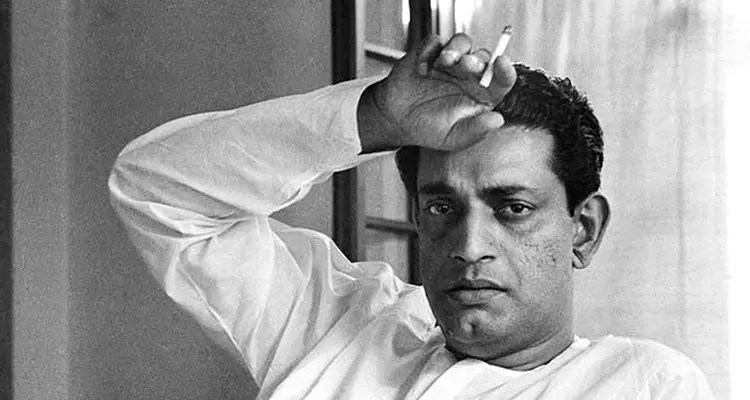
In the aftermath of the war, an internally divided country that had just regained its independence from the Englishmen – yes, India – is overwhelmed with humanism. Bengali cinema, in the north, is cultivating its GOATs. These years saw the artistic birth of Satyajit Raya and of the cinema of social realism – a cinema of people, for people, about people – inspired by the faces in Bengal. What had just occurred in the world changed forever the way we look at each other.
60s
Ōshima Nagisa and the Japanese New Wave brought at the center of the discussion the question – why cinema? – What do I do with cinema? And why is it always something political? This is the cinema of knife-throwing. But start by watching In the Realm of the Senses to get a little bit more than just the historical context of Asian culture.
70s
Oh yes! Cinema d’auteur. Abbas Kiarostami – said to be one of the greatest auteurs in history – just happened to be born in Asia. His cinema isn’t just a blend of documentary and fiction, it is a postmodern discussion of where the cinematic experience lies: inside us or inside the screen?

80s
Dragon-born Hong Kong cinema on VCD and Betamax spread the wave of discussion far beyond the home soil, even though the home soil had become the main point of discussion. Filmmakers like Tsui Hark, Ann Hui – but also Hou Hsiao-Hsien from Taiwan – are so different and yet so close to each other on the level of theoretical discussion, as their aim is not to reflect on colonialism but to create de-colonial art.
90s
While poor Tarantino rewatched Chungking Express for the fiftieth time, the Sixth Generation of Chinese filmmakers quietly rose. Born out of the tail-end of the Cultural Revolution, they came of age in a globalized world. Jia Zhangke brought forward his own theory: think twice before demolishing a house to build a shopping mall.
Let’s not forget Asian cinema.
Let’s share it, reflect with it, and benefit from it. Not because it’s missing, but because it’s essential.
Viktor Smolkin
Fonts
Robert Stam – Film Theory: an Introduction
Michael Berry – Jia Zhangke on Jia Zhangke

 The Password