
A play about perception
The University of Warwick is well known for its vital and vibrant drama landscape. Students are constantly working with each other to create marvellous theatrical productions.
Bathtub is one of the most incredible plays of this academic year. Funny, fresh, emotional, energetic, profound, and professional are only some of the adjectives that can describe it. This one-woman show follows the story of Ro, the main character, with all her desires and struggles as she navigates through life. This unusual and captivating title, Bathtub, stems from the fact that, while thinking about core experiences, Ro is indeed having a bath.
In the first part of this interview, we will be talking to Chloe Britain, the play’s writer and actor, and Anoushay Dar, the director. They will talk about their deep love for theatre, and they will unravel the process of creating this performance.
Thank you to all the members of the team for being so talented and for making this project possible: Chloe Britain, Anoushay Dar, Polly Virgoe, Diya Sengupta, Fai Banks, Connie Locker, and Freya Carey-Wood. Thank you for sharing Ro’s story in such an amazing way.
If your life was written by a famous playwright, who would they be?
C = Nick Payne.
A = Duncan Macmillan.
Tell me a famous character who best represents you.
A = Rapunzel. She’s so me: reading, baking, and being with nature. I share her whimsical nature.
C = Katniss from Hunger Games. She’s driven, I’m driven. She does archery, I can’t do archery – yet, but I might learn. And she likes being outdoors.
How would you describe Bathtub with five words? What’s the meaning of the play?
C = Should we do alternate words?
A = Okay, cool. Oh gosh, you go.
C = Identity.
A = Relationships.
C = Queerness.
A = Otherness.
C = Perception.
C = Bathtub is a dark comedy that tells the story of Ro, the central character, through her being in her bathroom. It explores her relationships with others and herself as well. It’s laced with a lot of moments of comedy. I don’t think it takes itself too seriously.
A = The show is a nice balance between how we perceive ourselves and how others perceive us. Ro is a young adult who faces hardships and confusion as she grows up.
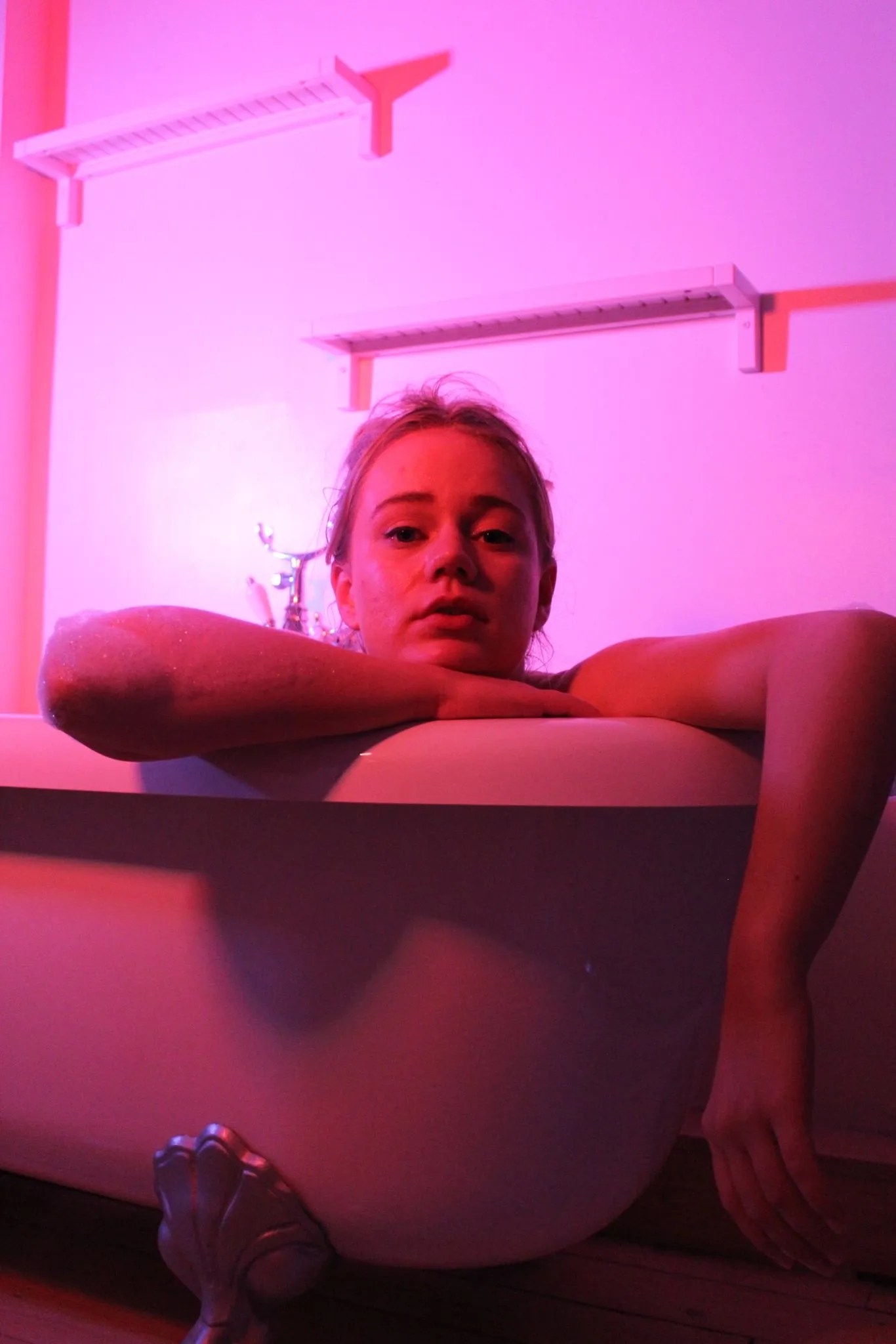
The story proceeds while the main character is talking about the “perfect bath”. How did you come up with this idea for the script? What was your inspiration?
C = Baths can be quite contemplative, and I came up with the idea of a play called Bathtub. I had the vision of a moment where the character holds herself and says “I love you” multiple times. This was the original idea. I wrote it in my notes in 2022, a long time ago, and left it. When I get ideas for writing, I usually write them down, even if they’re not fully formed, and then I come back to them to see whether they’re interesting or not. This idea just kept on sticking with me. I wanted a play that explores who you are externally versus behind closed doors, because the bathroom is such an intimate environment.
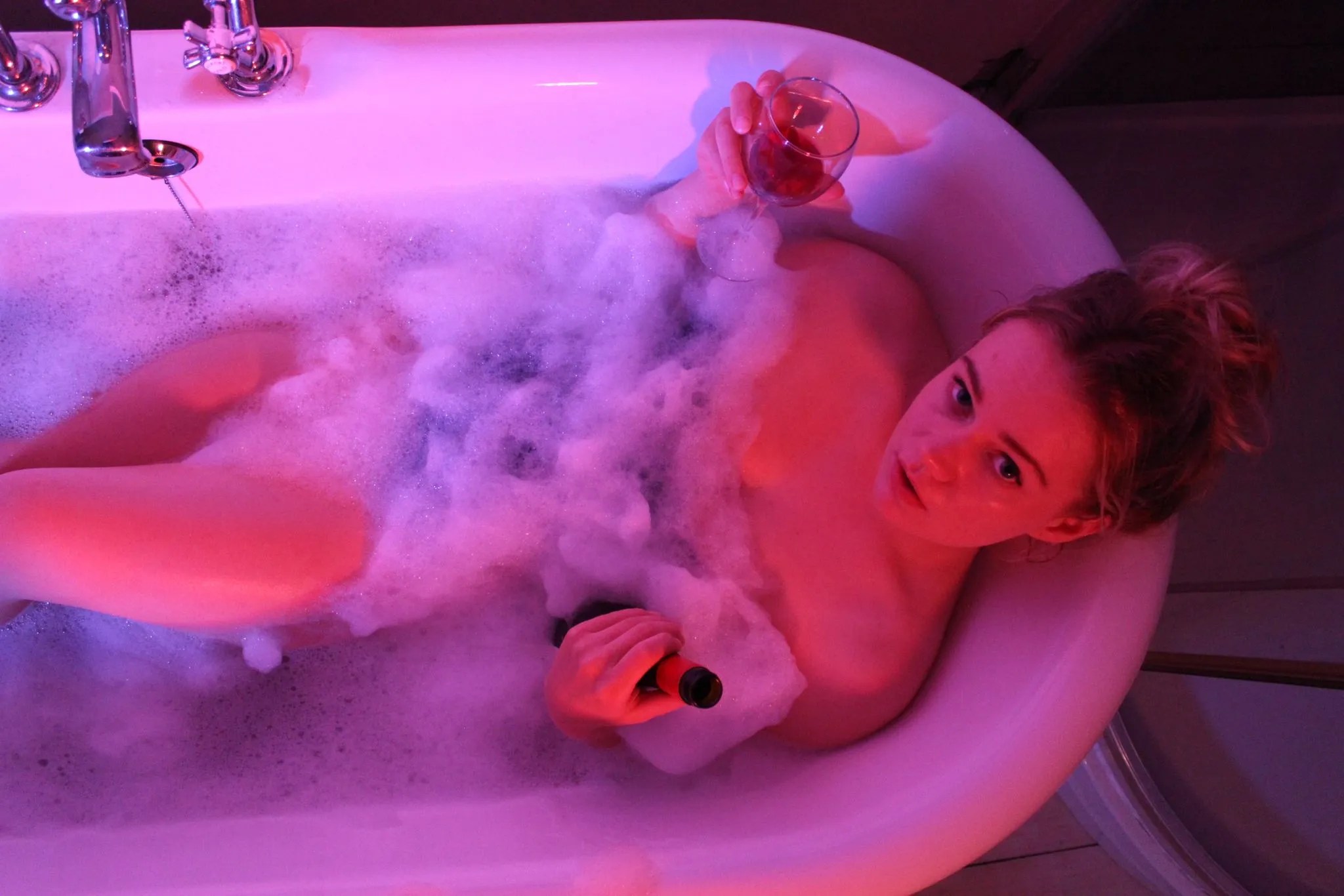
What was it like to step into Chloe’s work as the director? Did you bring a personal vision to this project?
A = I loved working with Chloe on this! When she asked me to do it, I was very excited. It was also quite a big challenge for me: working on a one-person show, having to figure out every single character and going into their depths. In some rehearsals we were focusing on a specific character to build their individual worlds and then we had to merge them together. It was such a fun and wonderful journey to be on. We rehearsed for a really long time, and some things were completely different from what you saw in the end.
C = I’m going to jump in just to clarify that I had the original idea of the script, but the writing process was over a long period of time and Shay stepped in before it was finished. She was absolutely incredible in facilitating rehearsals, which then allowed me to better portray the characters.
A = When the script was finished, there were obviously moments dotted throughout, like movements and pauses, and those were the things we worked together on.
You are both writers and actors. Which one comes first? What’s the relationship between these roles? Do they complement each other?
A = I’m a writer at heart, for me writing comes first, but it is very much in conversation with acting. By saying the words out loud, I always find new things and the script becomes something different than what I originally wrote. This is something that really helps me. As a writer and actor, it’s nice to know how the other production teams also work: directing, producing, marketing.
C = I’d say I’m an actor first. I’m a performer. But I’ve always wanted to write and I write a lot of poetry. Acting is what I really want to go into, hopefully alongside writing as well. Writing a play for the first time taught me why it’s important to acknowledge certain things to the script. Maybe in the past I might have read the script and not given much thought to the fact that every single comma, or full stop, is intentional. Every pause has been put in there for a purpose and a reason by the writer. It’s been cool to revisit playtexts from that point of view. You get a better understanding of details.
Tell me 2 pros and 2 cons of being a writer.
C = A pro of being a writer is that you get to put your images and thoughts into the world. Potentially, a con is that you have to accept that, if you’ve written something, people can do whatever they want with it. They might misinterpret something. You must be able to let it go.
A = This is not really a con, it’s a pro-con: writing is quite a vulnerable thing to do and there’s a lot of anxiety that comes with that.
Now, 2 pros and 2 cons of being an actor.
C = You get to step into someone else’s world. Not only you take inspiration from the writing, but you also bring your own self to it; it’s like a hybrid situation. A con is that you have slightly less control over things.
A = As a writer-actor, there is a tricky con that consists in having a vision and not wanting it to be changed. As an actor, sometimes you face a lack of communication.
Anna Baracco

 The Password