Part 1: The Industrial Soul and the Early Years
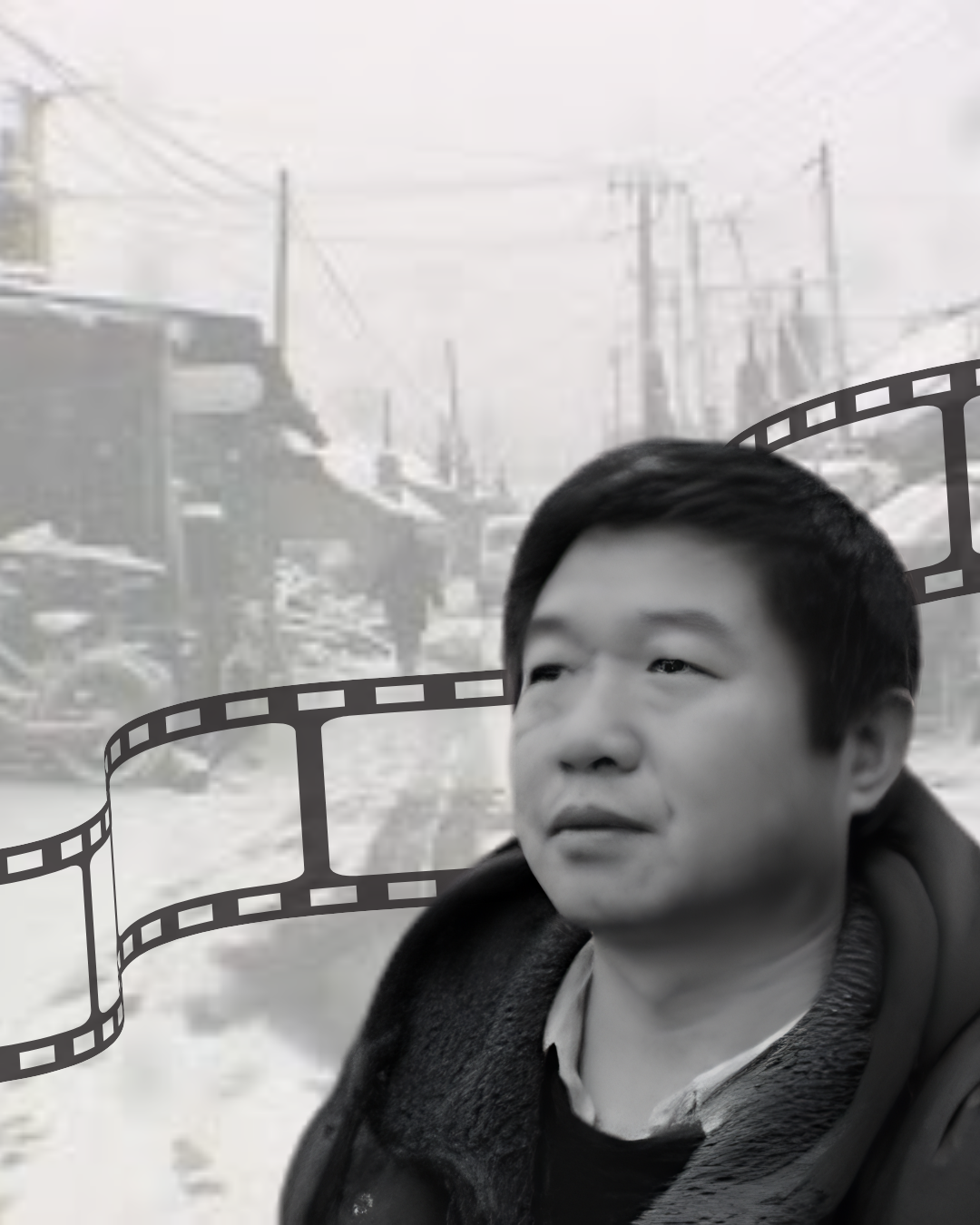
Wang Bing is a 58-year-old Chinese director whose approach to capturing reality defined the documentary cinema of the 21st century. Wang Bing — who now lives in exile in Europe — came to Turin, where in 2002 he was revealed to the public as a rising star of cinema, to give a masterclass on his artistic journey. Over the years, Wang Bing has filmed people who survived labor camps in the Gobi Desert, sisters in Southeast China near the Burmese border, inmates in mental health centers, and an elderly woman near death. In doing so, he takes as much space and time as it’s required, in his opinion – his films aren’t slow; they are just very long.
With a handful of life stories revolving around his homeland, Wang Bing shows us why his cinema is not political per se, what the cultural situation in China is today, and the vital role memory plays in his art.
This is the first part of his masterclass held in November 2025 at the Cinema Massimo, in Turin.
How to Start a Filmmaking Career in the Early 2000s – a Guide
“At the very beginning,” Wang explains, “I hoped to work just like everyone else in the film industry — shooting TV dramas, feature films, and all sorts of movies we see. But because I was in China at the time, I didn’t have those kinds of working conditions.”
He began shooting Tie Xi Qu (West of the Tracks) in 1999, a time when “making cinema” was still largely restricted to celluloid film and therefore less accessible. Restricted by this difficulty, and the country’s disinterest in funding cinema, Wang found a MiniDV camera and used it to collect the material. By facilitating flexibility, he could shoot day and night, in very unexpected places, and in any situation. “I only hoped to shoot the kind of film I had imagined, but I didn’t know what it would become.” He spent his days documenting bodies in motion and the details of their routine, filming their lives. “I didn’t know who would watch this film in the future.”
People
Moving from a collective portrait of the working class, Wang Bing’s cinema distinguishes individual stories. He seeks to make the documentary more vivid “to favor the characters I filmed with a cinematic depth of narrative,” to make space, and give freedom for their stories. In the history of cinema, the “worker” is often treated as a symbol or a political tool. Wang Bing does the opposite: he strips away the symbolism to find the human. He usually maintains contact with the people he worked with, whom he shot. This is a fundamental part of his art: building relationships with people, getting to know their lives and being able to open their stories up to us viewers, thanks to their willingness to share.
Space in Tie Xi Qu
The question of space is one of the most frequently posed by scholars regarding West of the Tracks. There is a stark contrast between the huge, now-dismantled factories and the small, private lives of the workers. The train wagons that run through the film are the heart of the factory, representing a nostalgia for the cinema of the past and for spaces and lives that are no longer with us. As a student of cinema history, one cannot help but see the echoes of the Lumière brothers‘ Arrival of a Train here, but reimagined as a funeral march for the industrial age. The director explains: “Without the train, I wouldn’t have been able to capture the “soul” of that industrial area so freely, or to construct it within the film.”
Is All Art Political?
“These factories, these enterprises, and the people living within them all formed a way of life under the Chinese planned economy since 1949,” Wang says. “So within these factories, the workers we see were effectively tools, operating within the machinery of that political system.”
When making Tie Xi Qu, Wang Bing had in his mind an exact film. He might not have known how to make it, who would watch it, or what would be the result, but the core idea was there. “I didn’t want to make a ‘political film’, per se. But I care about human lives — how these people live. And their way of life was produced within a very intense political environment.” He shows that the “system” is not an abstract concept, but something that physically weighs on the shoulders of the people.
His cinema explores the intimate level of people’s lives; it is about people living in the system, not about the system itself.
Viktor Smolkin


Lascia un commento